
Blog
Receive my free novella, Across the Country, when you join my Reader Community!
Get your free e-bookA Life Interrupted, A Legacy Enduring
As America celebrates her 250th birthday, we are invited to remember not only the founding ideals of liberty and courage, but the countless ordinary citizens who carried those ideals through history at extraordinary personal cost. For my family, this milestone brings to mind one such man—my father, Walter Troyan—a sailor, a gunner, and still a teenager who gave up everything familiar to serve his country in its time of need in WWII.
Daddy was just seventeen when he made the decision that would alter the course of his life. He left high school behind his junior year, along with the dreams of youth that filled his days. He had been the concertmaster of his school orchestra, a gifted violinist whose music once defined his world. That violin fell silent in its case when he chose instead to wear the uniform of the United States Navy.
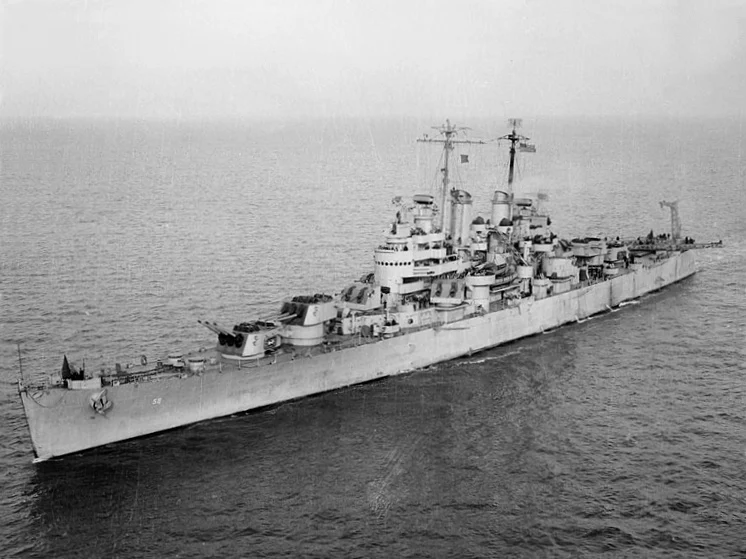
From boot camp to gunnery school, he was shaped quickly by the urgency of war. Still a boy in many ways, he was assigned as a gunner aboard the USS Denver, a light cruiser that would see intense action in the Pacific Theater. His first taste of combat and bloodshed, not quite 18 years old, came in March 1943 at the Battle of Blackett Strait, where the reality of war—sudden, violent, and irreversible—introduced him to the cost of freedom.
Later that same year, in November 1943, the Denver was struck during the Battle of Empress Augusta Bay. A torpedo blast crippled the ship, leaving her dead in the water with severe damage to the engine room, killing 20 young sailors. Survival in that moment depended on discipline, training, and resolve. The Denver endured, but only after limping through a series of temporary repairs before making the long journey to Mare Island Naval Shipyard in California for full restoration.
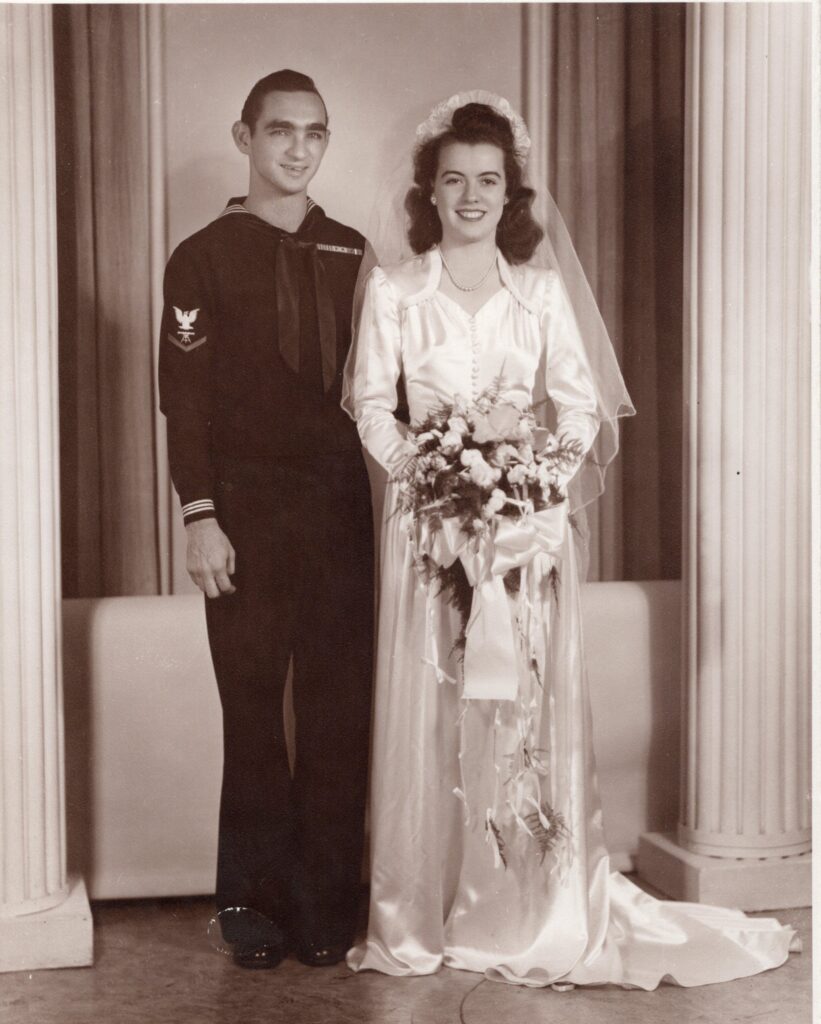
It was there, in the midst of war’s interruption, that another chapter of my father’s life quietly unfolded. At Mare Island, between January and May of 1944, he met my mother, Alberta Thomas. She was serving her country as well, one of the many women known as “Rosie the Riveter,” working tirelessly to keep production of submarines going and damaged ships operational. In those brief months, they fell in love after a blind date and became engaged. Yet duty once again interrupted. When the Denver returned to the Pacific, their whirlwind romance was set aside, replaced by uncertainty and separation.
War, however, was not finished testing my father. In November 1944, Daddy and several other gunners were assigned to a barge to retrieve armor-piercing shells from an ammunition ship—the USS Hood. Discovering that the ship had no such shells available, my father made a decision that likely seemed routine at the time: he ordered the barge to turn around to seek supplies from another ship. Within minutes of their departure, the USS Hood exploded. There were no survivors. Had my father delayed, even briefly, he and the men with him would have perished.
It is difficult to measure the weight of such a moment—the narrow margin between life and death, the realization that survival sometimes rests on a single decision. For my father, it became one of the defining memories of his service, a reminder of both the fragility of life and the providence that carried him through.
After eighteen months apart, my parents were reunited at the end of the war. They married and began a life together, forged not only in love, but in shared sacrifice and resilience.
As we commemorate 250 years of American independence, stories like my father’s remind me that freedom is not an abstract ideal. It is lived out in the choices of individuals—young men and women who set aside personal dreams, face unimaginable danger, and serve something greater than themselves.
Daddy returned to his violin playing in my growing up years. I enjoyed his sweet music. But the music of his youth had been replaced by the thunder of naval guns and the silence that follows loss. Yet his life became its own kind of composition—a testament to courage, duty, and enduring love.
In honoring America’s past, I also honor him. And in remembering him, I remember the generation that secured the freedoms we celebrate today.